International Institute of Genealogical Studies

LEADERS IN ONLINE GENEALOGY EDUCATION

International Institute of Genealogical Studies - LEADERS IN ONLINE GENEALOGY EDUCATION

What’s New?: Manitoba Ancestors Course Updated

Canada Flag Drawing ,grunge And Retro Flag Series by taesmileland/Courtesy of Freedigitalphotos.net

Canada Flag Drawing ,grunge And Retro Flag Series by taesmileland/Courtesy of Freedigitalphotos.net

What’s new at The National Institute? An update to the course Research: Manitoba Ancestors.

Have Manitoba ancestors? This course will help you learn more about the specifics of researching in this area. The course description states:

“Permanent settlement in Manitoba began in the early 1800s. This course will demonstrate how the records the Hudson’s Bay Company, the Dominion, provincial and municipal governments created help the genealogical researcher trace ancestors in Manitoba. Emphasis will be placed on how to access the records and how to use them effectively.

Although the focus will be on the major government and religious records, the course will demonstrate how to supplement these records by using local newspapers, cemetery records, community, school and church histories. Other important resources to be discussed are the collections and programs of genealogical, historical and ethnic societies in Manitoba.”

Check out the Course  page to learn more.

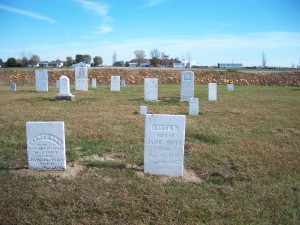
Planning a Cemetery Trip


Copyright 2013 Tami Pelling. Used with permission

Copyright 2013 Tami Pelling. Used with permission

by Tami K. Pelling, PLCGS. Staff, The National Institute for Genealogical Studies

Just  as  many  of  our  ancestors  frequently  visited  cemeteries  on  Sunday  afternoon  to  enjoy  a picnic, tend to the care of a gravesite, or pay respect to their loved ones—we follow in their footsteps. A picnic in the cemetery as a child with my great aunt, Lucille, is a memory that I will always treasure.  Another  childhood  memory  that  I  hold  just  as  dear  is  traveling  from cemetery to cemetery with my mother and Lucille to place flowers on  graves of family members—every holiday, birthday, and anniversary—of course, during the warmer months. So now that it’s summer, you might be ready to plan your own cemetery trips.

But first, a bit of caution. Safety first!  It doesn’t matter whether you are visiting a big city cemetery or a pioneer cemetery surrounded  by  cornfields and  woods. Safety cannot be emphasized enough–take someone with you and bring a fully charged cell phone!

In planning a cemetery trip, the first item on the agenda is to learn the location of the cemetery or cemeteries you wish to visit and determine if they are located on private property, governed by a trustee, association, organization, or corporation. If you are unfamiliar with the area, you may wish  to  contact  one  of  the  local  funeral  homes,  genealogical  or  historical  society,  library,  or government office to determine ownership. At the same time, inquire whether the cemetery has an office along with contact information. It is important to remember if the  cemetery  is  located  on  private  property  and  the  landowner  does  not  allow  access  to  the cemetery,  you  can  be  charged  with  trespassing. The landowner should be contacted prior to the visit to gain  permission to access the cemetery and discuss any  restrictions.

Second, consider what your purpose in going to the cemetery. Do you wish to locate the gravesite of your ancestors? Are you looking to survey, transcribe, and photograph the cemetery? If your visit to the cemetery is to locate the gravesite of your ancestors, a cemetery map should be obtained. If a cemetery map is not available, print a satellite view of the cemetery from Google Maps. The satellite image of the cemetery will allow you to study the surrounding area. If children will visit the cemetery with you, remind them of proper cemetery etiquette. Children can be an asset—prepare index cards with the names of the individuals you seek. These items allow the children to help search for the gravestones, place and assist in their letter identification and/or reading skills. If your purpose is to photograph your ancestor’s gravesite or the entire cemetery, you should determine if photographs are allowed. Some cemeteries  may  not allow  visitors  to take  photographs—even  of  their  own family  gravesite. Many  small  inactive  cemeteries  do  not  have  a photograph  policy;  however,  it  is  best  to  be  prepared  prior to  the  trip. It would be most unfortunate to learn upon arrival that access to the cemetery will not be granted or photographs are not allowed.

Third, prepare your cemetery kit. Just like planning a research trip to the library, archive, courthouse, etc., you must be prepared and bring along necessary tools. With today’s technology, many people can visit the local cemetery with just one tool—their cell phone. With a cell phone in hand, you can do everything from use map and GPS features as well as take photographs, notes and upload data. BillionGraves  has  a  wonderful  app  that  can  be  used  in  the  cemetery  while  photographing tombstones. The app attaches the GPS coordinates to the photograph. Cemetery  notes  can  be  taken in  many  formats  while  utilizing  your  favorite  app.  Audio and video can be recorded. Family group sheets, pedigree charts, and family notes can also be viewed through an app.

My cemetery kit may contain more items than the average cemetery visitor. This cemetery  kit  list  has  been  compiled  over  many  years  of visiting,  transcribing,  photographing, plotting/mapping,  and  restoring  cemeteries  (restoration supplies  have  been  omitted  from  this list).  Everyone is different and, therefore, your cemetery kit will include supplies that are best suited  to your needs. Here are a few items from my kit:

Cemetery Kit

Road Map

Cemetery Map

GPS

Burial list of family members

Pedigree charts, family group sheets, research log


Notebook/paper or note taking app

Pen, pencil, pencil sharpener

Clipboard(s)

Flowers

Water bottle and snacks

First aid kit

Hand sanitizer

Sunscreen

Hat, bandanna


Kleenex

Insect repellent

Cell phone and cell phone charger

Camera and extra batteries


Compass

Rubber gloves or gardening gloves (protect hands from bird droppings, etc.)

Bottled water and small spray bottle (wash bird droppings, etc. from stone)

Whisk broom (brush away grass and leaves)

Gardner knee pads (protect knees  from uneven ground and clothing  from dirt)

Pruners, shears (remove growth next to stone to aid in reading)

Small chair (you might wish to stay awhile)

Bag (to remove trash from cemetery)


Want to learn more about researching cemeteries? Check out our US: Cemetery and Mortuary Records course.
Course Tip: Chronicling America

Earlier, we spotlighted the US: Newspaper Records  course as part of the My Favorite Course blog series. Are newspapers your favorite genealogy source? Here’s a tip from the course.

Chronicling America

The website Chronicling  America  is  a  repository of  select digitized  newspapers covering the years 1836-1922.

But Chronicling America offers more than digitized newspapers. Chronicling  America is  an  online  resource  that  can  be  used  to  identify newspapers  in  a  particular  area  and  time  period. Each  listing  provides details  about  the  newspaper,  such  as  dates  of  publication,  frequency,  and  language,  as  well  as  what  repositories  hold  either original  or  microform versions  of  the  newspaper.

Chronicling  America is  based  on  records  created  during  the  US  Newspaper Program that ran from 1982 to 2009. To  use  this  resource,  visit Chronicling  America and  click  on  the  button that  says  “US  Newspaper  Directory,  1690-Present.”  You  can  browse  by newspaper title using the letters at the top (e.g., clicking on the letter “C” will  list  all  the  newspapers  that  begin  with  the  letter  “c”).  Alternatively,  you  can search for newspapers in  a particular state, county, or  city, using the corresponding drop-down menus, and further limit the time period by selecting a year range. There are other search options such as keyword and language. You can also search by ethnicity or occupation to find specialty newspapers.  When you find a newspaper of interest, you can view the record for more details,   such   as   frequency   of   publication,   dates   of publication,   and  alternate titles. To see a list of repositories that have the newspaper, click on the link “Libraries That Have It” at the top of the record.

To learn more about newspapers and where they can be found, register for the US: Newspaper Records course.

My Favorite Course: US Newspaper Records

By Emma Whaley Compton, PLCGS

While studying for the American Records Certificate with the National Institute for Genealogical Studies, one of my favorite courses included in the program was US: Newspaper Records. If I had to choose a favorite record group for research, it would be newspapers, so it’s perhaps no surprise that I greatly enjoyed this course!

When you think about newspaper research, the most obvious thing that comes to mind is obituaries, which are a wonderful source of genealogical information, particularly if vital records are hard to get or may not even exist for that time period but newspapers offer much more to the researcher than just obituaries. You can frequently find birth, engagement, marriage and anniversary announcements and sometimes court cases, divorces, bankruptcies and real estate transactions will also be included.Then there are the regular newspaper stories or perhaps even photographs that may feature ancestors. Small town newspapers have society pages that give great detail about their inhabitant’s lives, such as who was in the hospital, had visitors from out of town, or may have been out of town visiting relatives, hosting a party or taking part in various club activities. Our ancestors didn’t have Facebook or smart phones, so they got all of their news (or gossip!) through the newspapers and we’re fortunate that many of these day to day records have been preserved and are even becoming accessible over the Internet due to digitization projects.

So newspapers can perhaps help us find out information about our ancestors directly, through announcements and articles but they can also help us understand our ancestor’s lives better through studying social history. What events were happening nationally (wars, recessions) or locally that had an impact on their daily lives?  For immigrants, ethnic newspapers helped them keep abreast of what was happening back in their homeland and other specialist newspapers served a similar purpose for religious communities, labor groups or the military.

The US: Newspaper Records course covers all these aspects of newspaper research in much greater detail and also goes into the history of newspapers in the United States. I found this very interesting, it’s surprising to learn how long newspapers have been a part of daily life (and no I’m not going to give that detail away, sign up for the course and find it out yourself!). Perhaps the most important part of this course is that it gives detailed information about how to find newspaper collections on a national and individual state level, so if you’ve always wanted to do newspaper research but didn’t know where to start looking, this should give you some ideas.

Although it’s an advanced level course in the American Records program, this really is a fun course. I knew I’d enjoy it, so I saved this course for last and I wasn’t disappointed. A word of warning though, you may become so immersed in the past when researching in newspapers that whole hours fly by unnoticed!


Bio: Emma Whaley Compton, PLCGS graduated from the National Institute for Genealogical Studies in spring of 2014 with distinction in the English and American Record Certificate Programs. A member of the Association of Professional Genealogists and Co-President of the Imperial Polk Genealogical Society, she started her own genealogy business, AncesTreeFinder Genealogy Research, early in 2015.  When not actively researching or trawling around cemeteries, Emma likes to spend time with her husband and cats, watch TV and movies and read books.  Originally from England, she now lives in Lakeland, Florida.


My Favorite Course: Methodology Part 2

By Lisa-Dawn Crawley, Student

Like the Baseball World Series but waaay better because it’s GENEALOGY, my favourite course from The National Institute for Genealogical Studies is not just ONE course — it’s an entire SERIES. I couldn’t pick just one!! I’m a Genea-Knowledge Nerd and, as such, I triumphantly welcome you back to Nerdville.

In case you missed it, I gushed about Methodology Part 1: Getting Started in my previous post.

I have to admit that I was definitely most looking forward to Methodology Part 2: Organizing and Skill-Building of all the (six) courses in the series. You should probably know that I’m the kinda gal who enjoys creating organizational systems and cleans when she gets stressed… However, if you want the answer to the question “What the HECK do I do with all this crap I’ve gathered from my own investigating, gramma, auntie, the attic, that nook, yonder cranny…??” this course will help you with that. I say “help” because I still don’t have everything in my vast cavern of accumulated genea-goodies labelled, filed and stored in comprehensive, orderly fashion. [I bow down to the genea-freak who does!! Are you out there?? Please say No so I can continue on in my delusion that everyone else is just as bad as me…] But at least I know what to do and how to do it!!

I must pause here to note that this course does NOT address the issue of proper preservation materials and techniques for your precious items. The Naitonal Institute does offer a course on that topic called Protect Your Precious Documents.

The material in Methodology Part 2: Organizing and Skill-Building builds slowly and surely upon that which was introduced in the previous course, delving deeper into the development of basic research skills. Emphasis is squarely placed on the importance of accuracy with objectivity and consistency in documentation. Ye olde noggin be not failproof nor foolproof, genea-friends! No matter how spry you think you are, memory alone is never good enough for tracking what you looked at, where it was, what it said, what you did with that information and how it impacted your research. It’s best to learn NOW, at the beginning, to prevent repeated work and wasted time. With that said, my own advice can only be to establish your good habits and best practices as early in your genea-journey as possible…

[You don’t really think about how MUCH you’ve learned in a National Institute course until you go to write a blog post about it. I mean, the sheer quantity of information just boggles my mind – how much I didn’t know before I started, how much I have learned since finishing and how much I need to review. But I digress… ] Education is ever ongoing, right? Right! So whether you’re looking to refresh, recycle, initiate or improve – this course delivers!

Always careful to acknowledge the fact that one way of doing things which works well for one person may not work well for another [and that is perfectly okay!!! as long as you abide by the consistency rule], Methodology Part 2 focuses on the skills required to “do genealogy” effectively. It reinforces the idea that research should not be a collection process but one of progression from the unknown to the known. Skills like citation, transcription, abstraction, extraction, deciphering old handwriting, noting interpretations, making comments and standards for these are explored in-depth. Methods of organizing (ie, reference numbering systems) and documenting your research processes (ie, checklists, forms, journals) are discussed. Much attention is given to the Not-As-Scary-As-It-Sounds Genealogical Proof Standard (GPS) which should govern your research practices and lead in the development of your research plans.

It’s a lot — but don’t worry!! A plethora of examples and exercises are provided to gently guide students along. Teachers are only ever an email away are are usually quick to answer questions. Don’t forget to check out the Virtual Meeting schedule and make a date to assail your genea-gurus with your myriad queries! [They actually like it!]

Until next time…
Happy Hunting!

Lisa-Dawn Crawley is a current student of The National Institute for Genealogical Studies. She is enrolled in four certificate programs (Methodology, Professional Development, Canadian Records and English Records) and hopes to graduate with honours in her hometown of Ottawa, Ontario at the 2017 OGS Conference, in the National Capital’s celebratory year of Canada’s 150th birthday. Her new blog LDC: The Zombie Genealogist chronicles her sleepless endeavours to bring the dead back to life, to interest her relatives and the younger generation in family history, to preserve some of her own thoughts, experiences and memories and, ultimately, to become a professional genealogist. Besides genealogy, LDC’s vices include books (so, so many books!), movies (and Netflix), boardgames and geekery (zombies, minions and Star Wars, oh my!), photography, contesting, bargain hunting, social media and privacy (yes, conflicting).

You can usually find LDC online at:

Twitter: @elle_dee_see

Facebook: facebook.com/TheZombieGenealogist

Personal Blog: http://thezombiegenealogist.blogspot.ca/